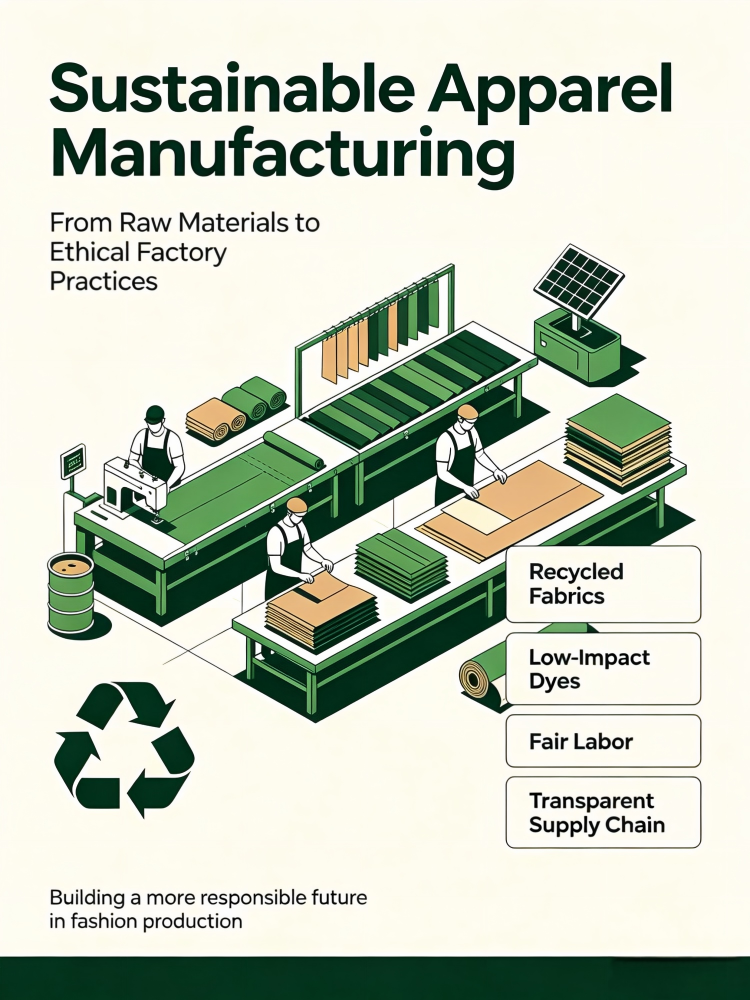
Sustainability isn't just a buzzword anymore — it's a business imperative. 68% of global consumers say they'd pay more for products from sustainable brands, and major retailers are starting to require sustainability credentials from their suppliers.
But what does "sustainable manufacturing" actually look like in practice? And how do you know if your factory is truly sustainable, or just greenwashing?
In this guide, we break down the four pillars of sustainable apparel manufacturing, explain the certifications that matter, and show you what we're doing at Zhejiang Zhongda Novotex to build a more sustainable supply chain.
The Four Pillars of Sustainable Apparel Manufacturing
1. Sustainable Materials: The Foundation
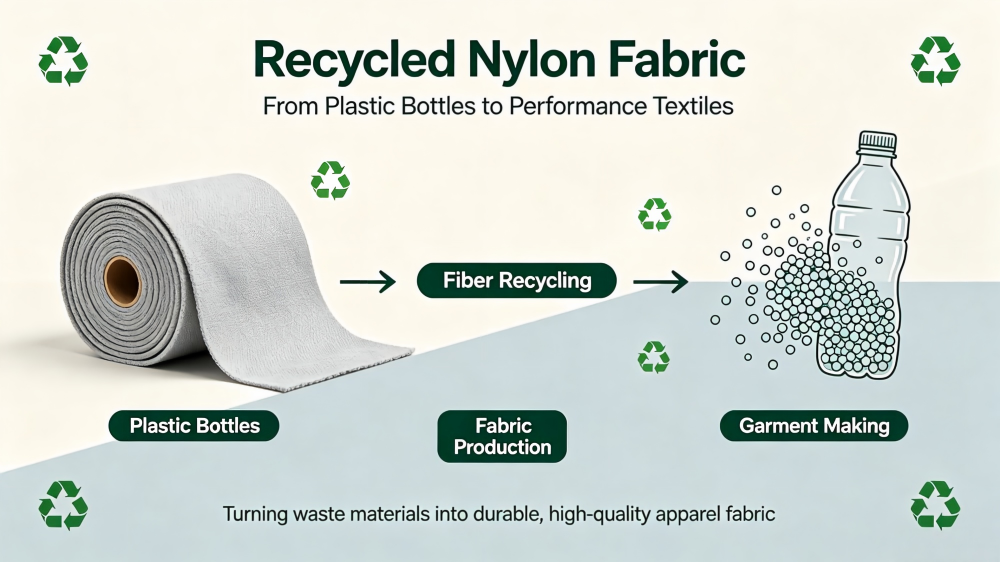
It all starts with fabric. Traditional polyester is made from petroleum, conventional cotton uses massive amounts of water and pesticides, and both contribute to microplastic pollution when washed.
Better alternatives we offer:
- Recycled polyester (rPET): Made from plastic bottles. Each meter of fabric keeps about 5 bottles out of landfills. Same performance as virgin polyester, but with a 70% lower carbon footprint.
- Recycled nylon: Made from post‑consumer and post‑industrial nylon waste. Perfect for stretch pants and activewear.
- Organic cotton: Grown without harmful pesticides, using 88% less water and 62% less energy than conventional cotton.
- OEKO‑TEX certified fabrics: Tested for harmful substances, so they're safe for both wearers and factory workers.
2. Environmental Stewardship: Reducing Factory Impact
Sustainable materials are important, but how the factory operates matters just as much.
What to look for in a factory:
- Energy efficiency: Solar panels, LED lighting, energy‑efficient machinery
- Water management: Water recycling systems, zero‑discharge dyeing processes
- Waste reduction: Fabric scrap recycling, minimal packaging, paperless offices
- Emissions control: Low‑VOC dyes, proper ventilation, carbon tracking
At our factory, we've invested in energy‑efficient sewing machines, LED lighting throughout the facility, and a fabric scrap recycling program that repurposes 90% of our production waste into cleaning cloths and insulation materials.
3. Ethical Labor: People Matter Too
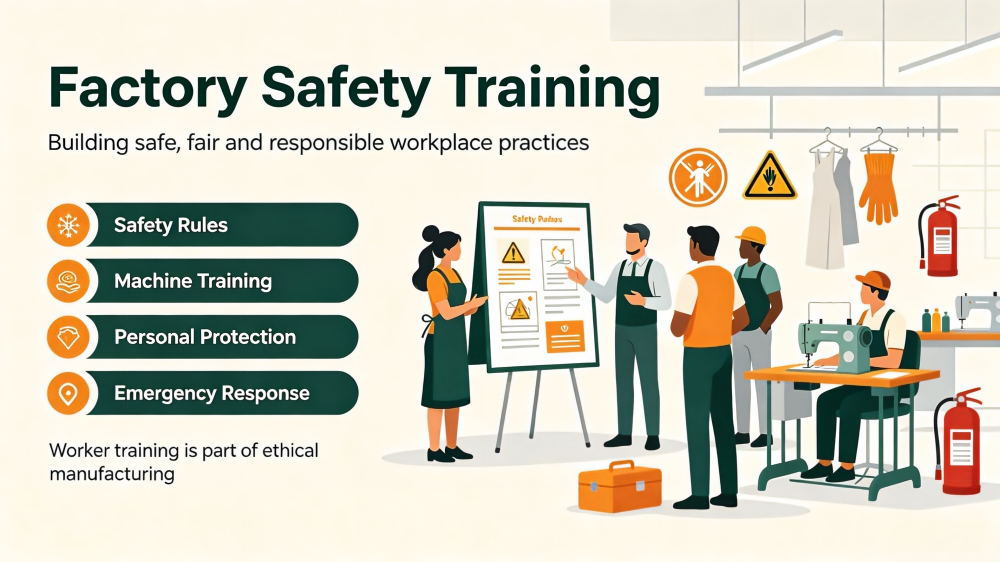
Sustainability isn't just about the planet — it's about people. A truly sustainable factory treats its workers fairly, pays living wages, and provides safe working conditions.
Certifications that prove ethical practices:
- BSCI (Business Social Compliance Initiative): The most widely recognized social compliance certification. Audits cover fair wages, reasonable hours, safe conditions, no child labor, and worker rights.
- SA8000: Another rigorous social accountability standard.
- Fair Trade Certified: Focuses on fair prices and fair labor conditions.
Our factory is BSCI certified, which means we undergo annual third‑party audits to verify that we meet international standards for labor practices, workplace safety, and ethical business conduct. We also provide regular skills training, safety equipment, and fair overtime compensation for all our workers.
4. Transparency & Traceability: Can You Prove It?
Anyone can say they're sustainable. Can they prove it?
What to ask your factory:
- Can you provide certification documents? (Always ask to see the actual certificates — not just a logo on a website)
- Can you trace where your materials come from?
- Do you have third‑party audit reports?
- Can I visit your factory in person or do a virtual tour?
We're happy to share all our certification documents, audit reports, and even arrange virtual factory tours so you can see our operations firsthand. No greenwashing, just transparency.
The Certifications That Actually Matter (And the Ones That Don't)
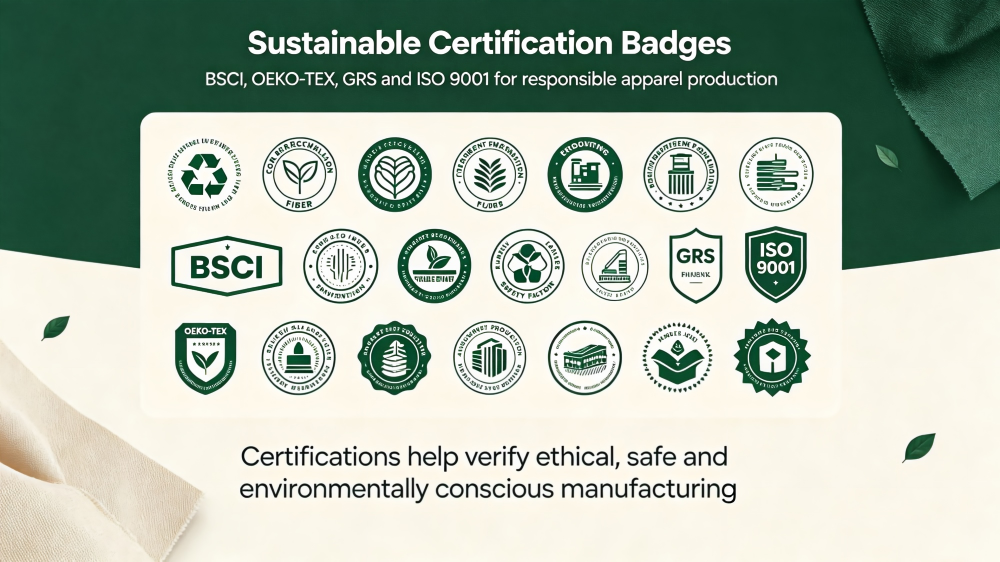
With so many eco‑labels out there, it's hard to know which ones mean something. Here's our quick guide:
| Certification | What It Covers | How Rigorous It Is |
|---|---|---|
| GRS (Global Recycled Standard) | Recycled content, social & environmental practices | ⭐⭐⭐⭐⭐ Very rigorous, third‑party audited |
| OEKO‑TEX Standard 100 | Fabric free of harmful substances | ⭐⭐⭐⭐ Well‑established, widely trusted |
| BSCI | Labor & social compliance | ⭐⭐⭐⭐ Industry standard, annual audits |
| ISO 14001 | Environmental management system | ⭐⭐⭐ Solid, but process‑focused not outcome‑focused |
| "Eco‑friendly" / "Green" (no certification) | Nothing specific | ⭐ Meaningless — greenwashing red flag |
Why Your Brand Needs Sustainable Manufacturing (Even If You Don't Market It)
You might be thinking: "My customers don't ask about sustainability, so why should I care?" Here's why it matters regardless:
- Regulation is coming. The EU's CSRD (Corporate Sustainability Reporting Directive) and similar laws will soon require even small brands to report on supply chain sustainability. Getting ahead now saves you headaches later.
- Retailers require it. More and more major retailers are adding sustainability requirements to their supplier codes of conduct. If you want to sell to bigger stores down the line, you'll need these credentials.
- It reduces risk. Factories with poor environmental and labor practices are more likely to get shut down, have supply chain disruptions, or cause reputational damage to your brand.
- It's just good business. Energy efficiency, waste reduction, and worker retention all save money in the long run. Sustainable factories are often better‑run factories.
Our Sustainability Journey
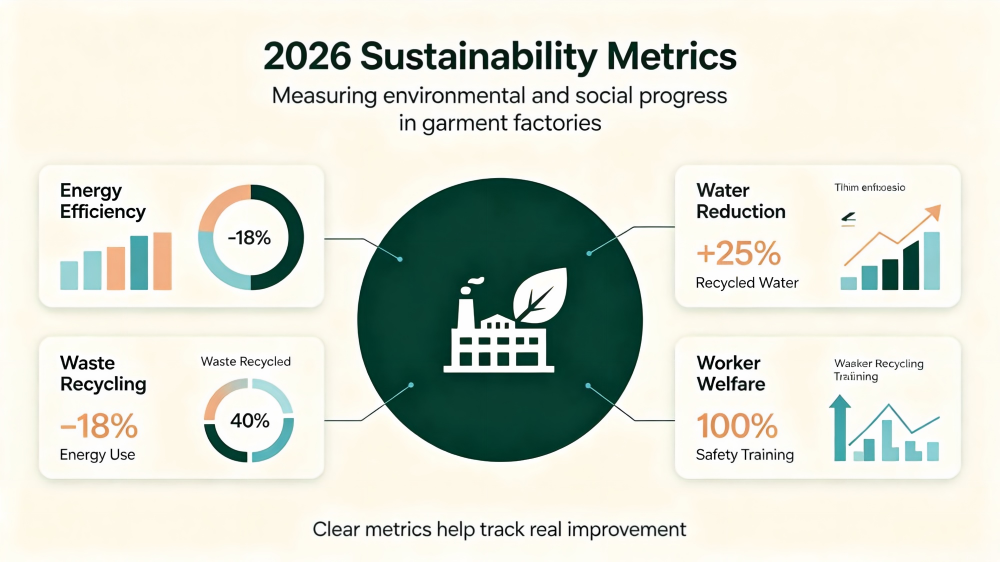
We're not perfect — but we're committed to getting better every year. Here's what we've achieved so far and what's next:
What we've done:
- ✅ BSCI certified for ethical labor practices
- ✅ OEKO‑TEX Standard 100 certified fabrics
- ✅ GRS certified recycled fabric products available
- ✅ 90% of fabric scraps recycled or repurposed
- ✅ LED lighting retrofit completed (35% energy reduction)
- ✅ Paperless order management system implemented
What's next:
- 🔜 Solar panel installation (target: 2027)
- 🔜 Water recycling system for dyeing processes
- 🔜 Expanded recycled fabric product range
- 🔜 Carbon footprint calculation for all product lines
📩 Want to Build a More Sustainable Collection?
We'd love to help you make your brand more sustainable — without breaking the bank. Our recycled fabric options are competitively priced, and we can help you find the right balance of sustainability and affordability for your brand.
Get in touch to:
- Request free recycled fabric swatches
- Get a quote for sustainable custom apparel
- Learn more about our certifications and practices
WhatsApp: 13616502209
Email: sales@zhongda‑novotex.com
Zhejiang Zhongda Novotex — Building a more sustainable apparel industry, one garment at a time.